Country
Italy
Location
Lake Como

Author
The Lake Proposal
The Complete Engagement Ring Guide: Trends, Stones, and Sizing
Everything to know before you buy: what's trending now, how natural, lab-grown, and moissanite compare, what carat and shape actually mean, how to find the right size, and what it means for a Lake Como proposal. We keep this guide updated as the market changes.
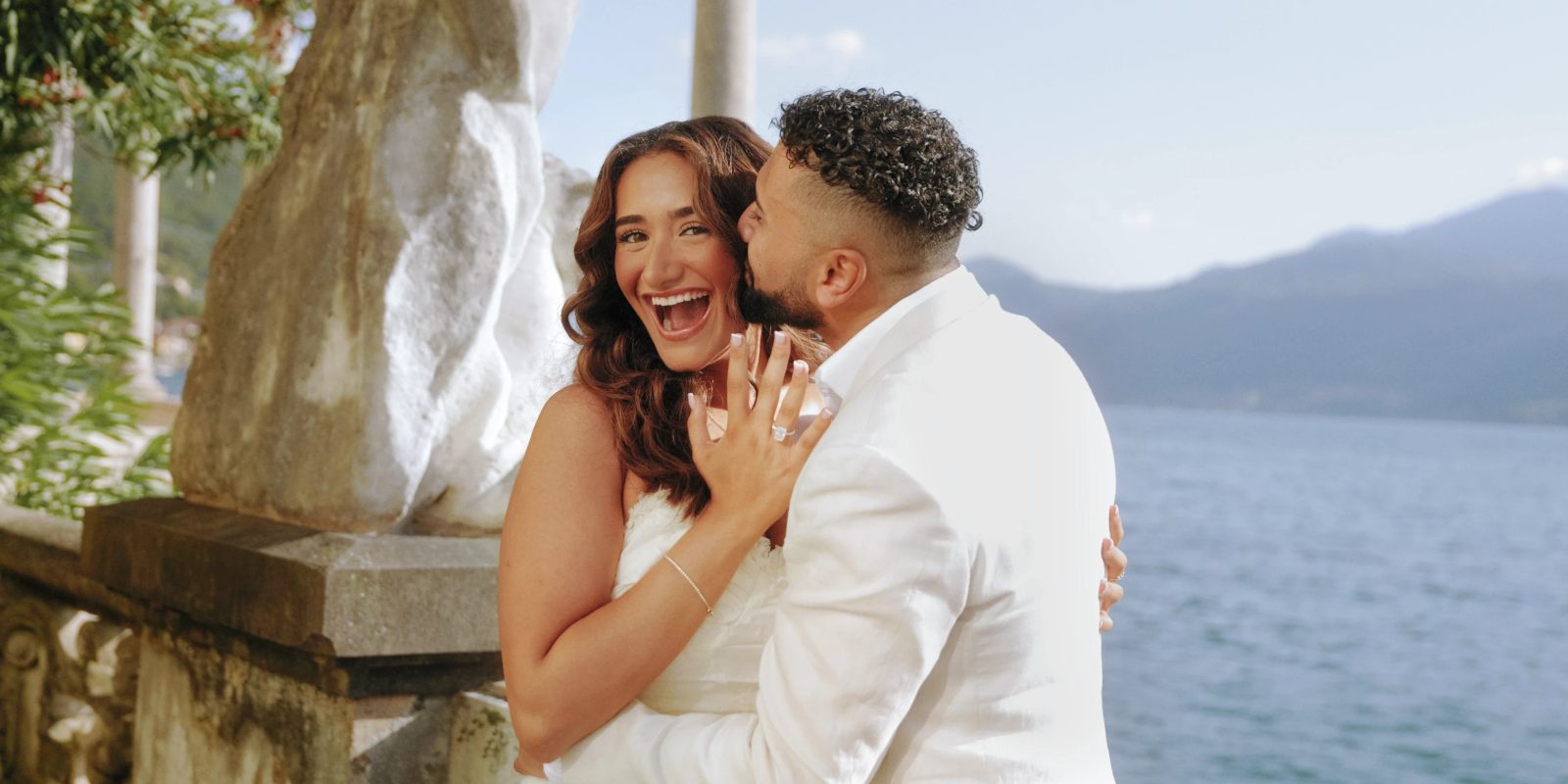
This is a living guide to choosing an engagement ring, not just a snapshot of what's trending. It covers what couples are actually buying right now, how natural diamonds, lab-grown, and moissanite compare, what carat and shape mean in practice, and how to find a ring size without tipping anyone off. We update it as the data and the market change.
1.GOLD IS OVERTAKING WHITE METAL
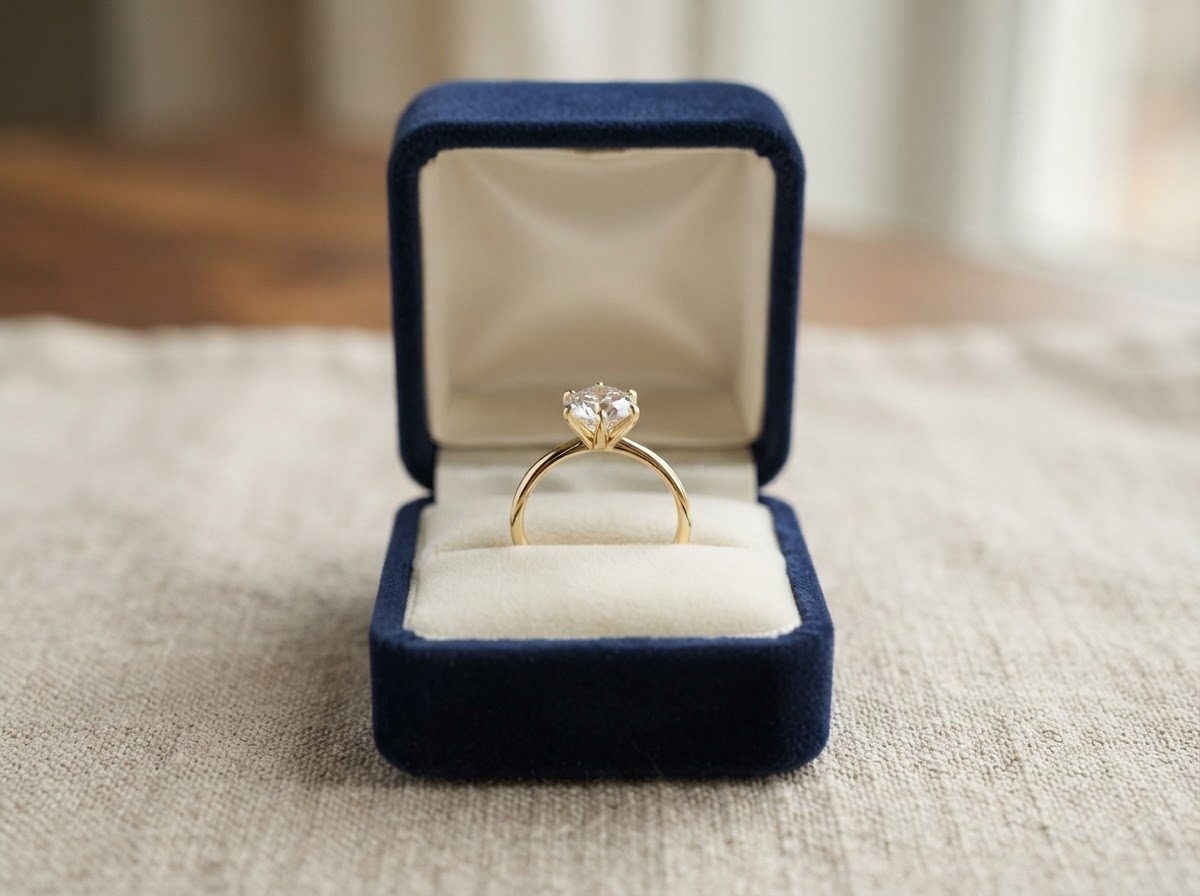
Yellow gold now accounts for 39% of engagement rings sold, and the share of couples choosing it has more than doubled over the past five years, according to National Jeweler's 2026 trend report. White metals still lead overall at 48% combined (35% white gold, 13% platinum), but the gap is closing fast. Jewelers point to couples wanting a ring that matches the rest of their jewelry, chains, hoops, stacked bands, rather than standing apart from it.
2.ROUND AND OVAL ARE NEARLY TIED
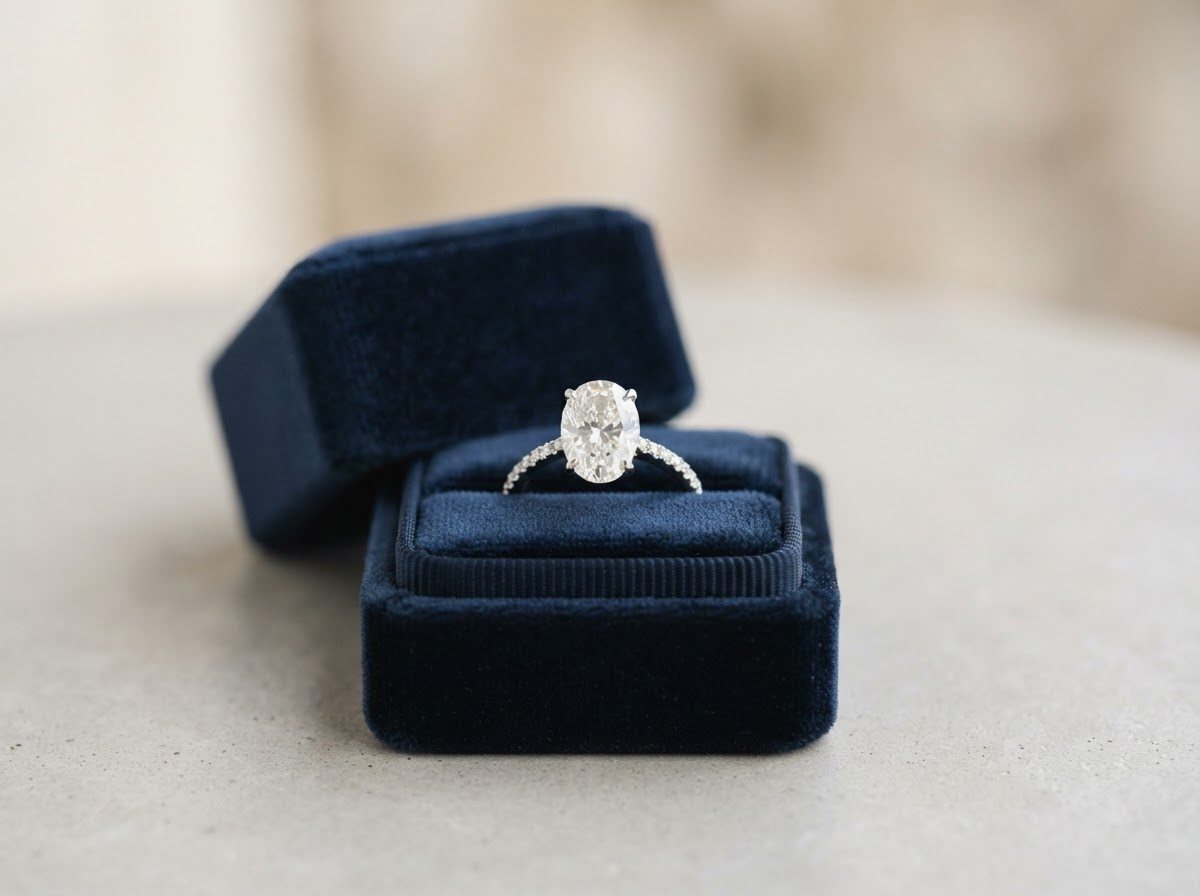
Round brilliant cuts are still the most requested shape at 26%, but oval has nearly caught up at 25%. Emerald cut comes in third and has grown the most of any shape over the past year. Round used to be the default choice almost by assumption. It no longer is.
3.THICKER BANDS AND BEZEL SETTINGS
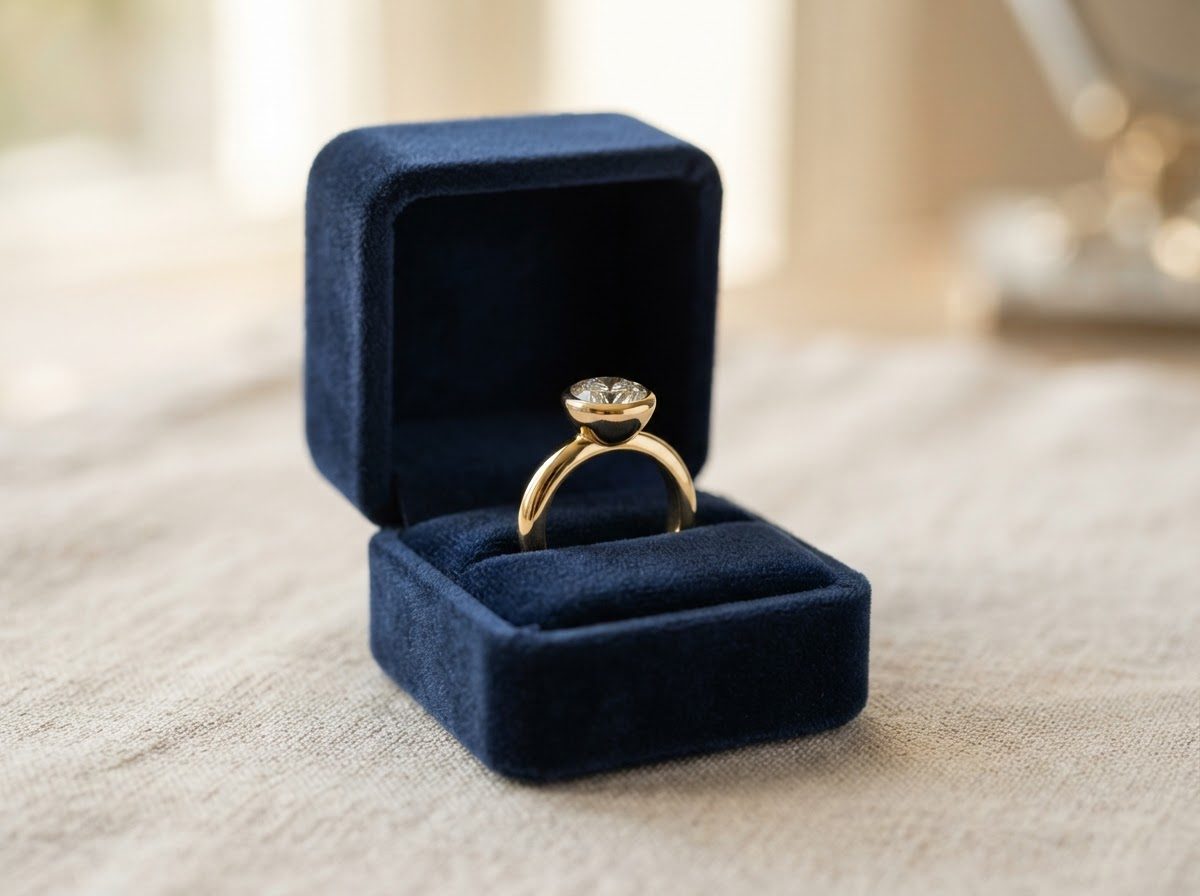
Chunkier bands and bezel-set center stones are both rising, part of the same maximalist jewelry mood driving bigger hoops and layered chains elsewhere. There's a practical side too: a bezel setting wraps metal fully around the stone, which holds up better through travel, boat rides, or a hike to a proposal spot than a traditional prong setting does.
4.LAB-GROWN DIAMONDS ARE NOW THE MAJORITY
The Knot's 2026 study puts lab-grown diamonds at 61% of engagement rings sold, and finished lab-grown ring sales rose 31% in 2025 while natural diamond ring sales fell 4%. The GIA notes lab-grown diamonds share the same chemical, physical, and optical properties as mined ones. The Knot's Esther Lee attributes the shift mainly to economic pragmatism rather than a change in what couples want the ring to look like.
5.LAB-GROWN COSTS LESS, AND MOISSANITE LESS STILL
Natural and lab-grown diamonds are chemically the same stone, graded on the same cut, color, clarity, and carat scale. The difference is where they formed, and increasingly, the price. Lab-grown diamonds cost about 73% less per carat than natural ones in 2025, up from a 27% gap in 2019, according to insurance data from BriteCo covering six years of appraisals. That gap explains more of the shift to lab-grown than changing taste does, which lines up with what The Knot's research found: couples choosing lab-grown mainly because the math works better, not because they want a different-looking ring.
Moissanite is a different mineral altogether and sits below both on price. It isn't a cheap stand-in either: the GIA notes it can show more fire and brilliance than diamond. At around a carat and above, that extra sparkle is often what gives it away on close inspection. It also scores about 9.25 on the Mohs hardness scale against a diamond's 10, still hard enough for daily wear.
None of the three looks worse in photos or on film. The difference shows up on the receipt, not in the proposal footage.
6.SIZE AND SHAPE, SIDE BY SIDE
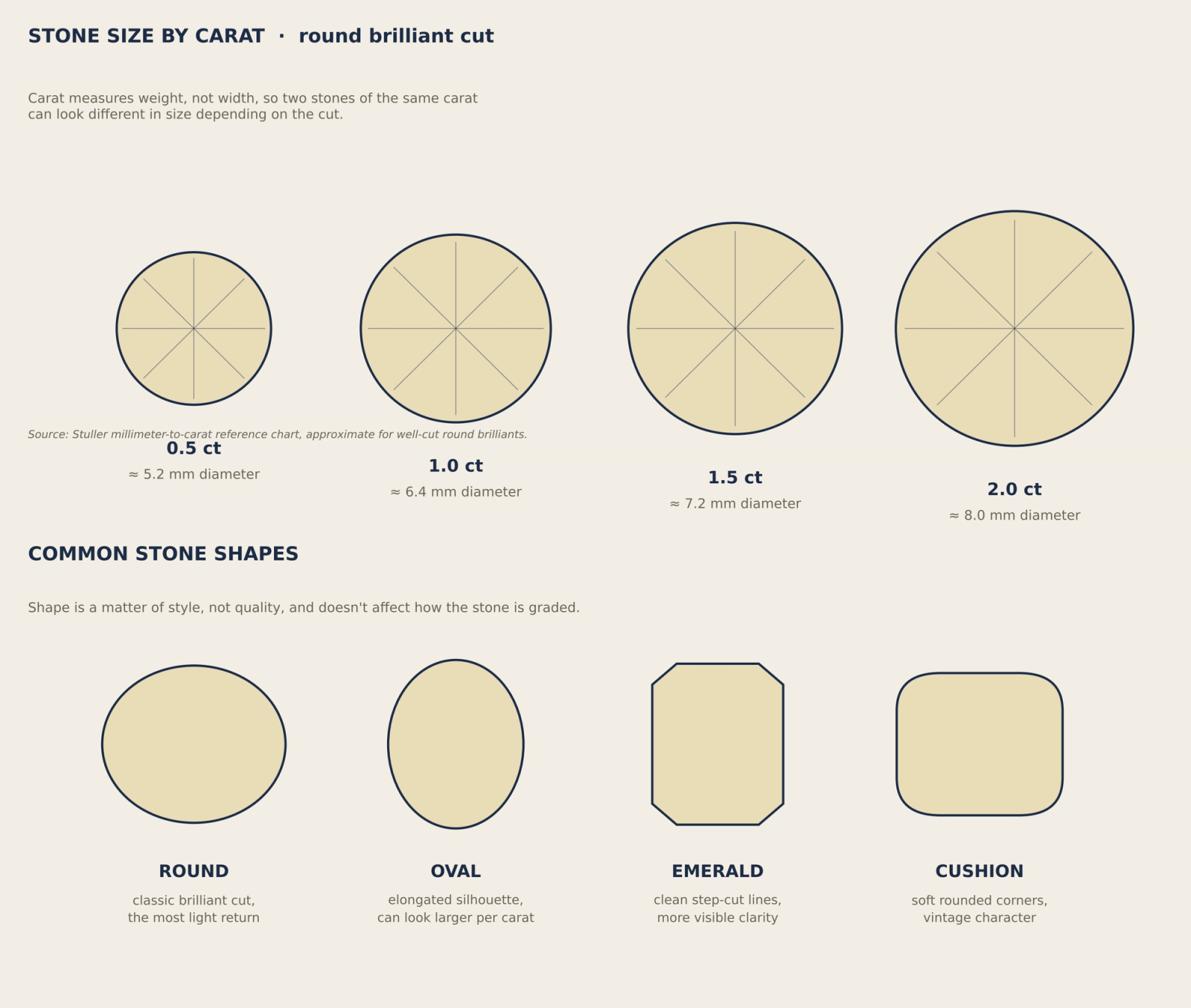
Carat measures weight, not width, so two stones of the same carat weight can look different in size depending on the cut. A well-cut round brilliant around 1 carat measures about 6.4mm across; at 2 carats, about 8mm. Elongated shapes like oval tend to look larger than a round of the same carat weight, since more of that weight spreads across the visible surface rather than sitting deep.
Shape is a style choice, not a quality marker, and doesn't affect how a stone is graded. Round still returns the most light and sparkle. Oval and emerald, the two shapes gaining the most ground in the 2026 data above, trade some brilliance for a more elongated look or cleaner visible lines. Cushion softens the corners for a vintage feel.
7.FINDING THE RIGHT SIZE WITHOUT GIVING IT AWAY
This trips up more people than any trend question does. A few methods actually work: borrow a ring your partner already wears on the left ring finger, noting which hand and finger since the dominant hand often runs about half a size larger, and bring it to a jeweler. Or ask someone close to them, a sibling or a close friend, who may already know the size from a ring given before. A soap or putty impression of a ring they own works too, if you can't take the ring itself out of the house for long.
Skip measuring the finger while your partner sleeps. It's a commonly suggested trick, but a paper strip rarely gives an accurate reading.
If you end up unsure, most jewelers will resize a ring after the proposal at little or no cost, so it doesn't need to be exact on the day.
8.WHAT COUPLES ARE ACTUALLY SPENDING
Average ring spend dropped to $4,600 in 2025, down from $5,200 the year before. Worth knowing: the old "three months' salary" rule didn't come from tradition. Research traces it to 1980s diamond advertising, which started the figure at two months and grew it from there. With student debt and housing costs weighing on more couples' budgets, a growing number are setting the number themselves instead of following it. McKinsey research cited alongside the spending data found that emotional meaning is overtaking status as what drives luxury spending generally, and that couples now rank travel above luxury goods when deciding where discretionary money goes. For a couple planning a trip to propose on Lake Como, that tracks: the ring matters, but increasingly it's one part of the day, not the whole budget.
9.CHOOSING A RING BEFORE A LAKE COMO PROPOSAL
Most couples we work with have the ring sorted before they land in Italy, especially now that bezel settings and custom designs take longer to make than a standard prong setting. If yours isn't finalized yet, that's fine too. The ring doesn't need to be ready to lock in a date or a location. We cover timing and spot selection in our Lake Como engagement guide and our guide to where and when to propose on Lake Como. If you want to talk through the day itself, get in touch with your rough dates.
Questions couples ask
Should we bring the ring with us or have it shipped to Italy?
Either works. Some couples carry it in hand luggage with travel insurance that covers jewelry, others have it shipped to the hotel a day or two before. If you're shipping it, leave a buffer for customs, and let us know once it's arrived so we can lock in the exact spot and time with confidence.
Do you need to see the ring before the proposal?
Not to plan the location or timing, but it helps with the photos and video. A bezel setting catches light differently than a prong, so knowing the setting in advance lets us think through where to stand for the close-up shot.
Will a lab-grown diamond or moissanite look different in photos or video?
No, not for lab-grown. It's chemically and optically identical to a mined diamond, so there's no visible difference in the footage. Moissanite can show slightly more sparkle up close at larger sizes, but it reads the same as any bright stone on camera.
Other stories you may like
Where & When to Propose on Lake Como
When to propose on Lake Como (season, light, sunset times by month, weather) and how to choose between an iconic villa, a quiet corner or a private boat.
Quiet Proposal Spots on Lake Como: Alternatives to Villa del Balbianello
Villa del Balbianello isn't the only option. Quieter Lake Como spots for couples who want the view without the crowd, with opening times and timing tips.